
See how a mid-market company simplified its ERP with a NetSuite to Intuit Enterprise Suite migration – improving efficiency, reporting, and costs.
Overview
A multi-entity holding company – comprised of a software business and an HR consulting firm – faced a growing challenge: their NetSuite ERP system had become too complex for their current business needs.
After divesting part of the organization, the company became leaner. However, their enterprise-level ERP remained unchanged, creating inefficiencies, workflow friction, and unnecessary costs.
By completing a NetSuite to Intuit Enterprise Suite migration, the organization successfully:
- Simplified financial operations
- Improved reporting speed and accuracy
- Reduced total cost of ownership
- Maintained multi-entity visibility and control
The Challenge: When NetSuite Becomes Too Complex
Company Profile
- ~70 employees across multiple entities
- Centralized finance team
- Multi-entity accounting and consolidation requirements
NetSuite was originally implemented to support a larger, more complex organization. After restructuring, the system no longer aligned with day-to-day operations.
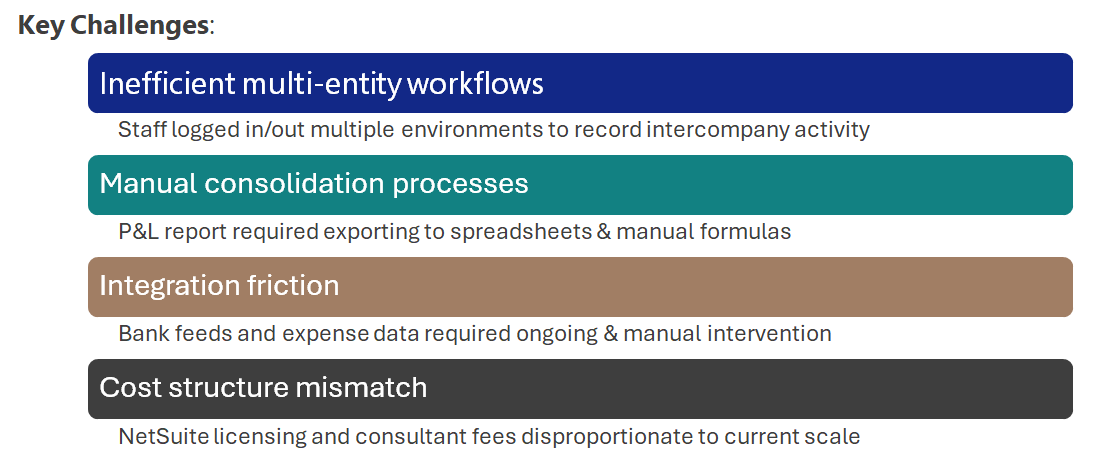
Key Pain Points
- Overly complex workflows slowed daily accounting processes
- Manual reporting workarounds required spreadsheets and extra effort
- System navigation inefficiencies reduced team productivity
- High ERP costs no longer aligned with business size
This was not a lack of functionality – it was a case of ERP overengineering for a mid-market business.
Objectives: Right-Sizing the ERP System
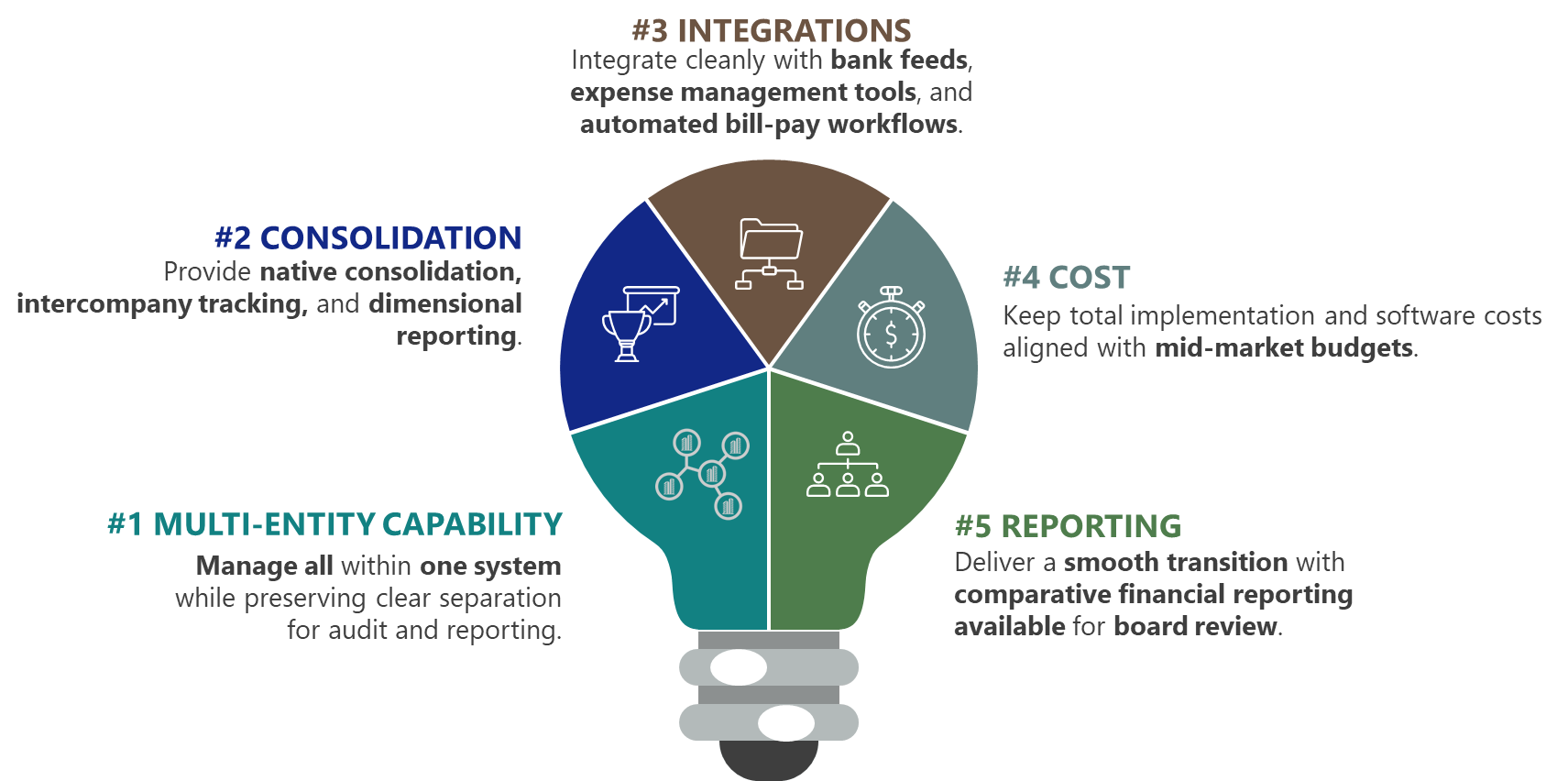
Leadership outlined clear goals for a new financial management solution:
- Maintain multi-entity accounting in a single system
- Enable automated consolidation and intercompany transactions
- Integrate with banking, expenses, and bill pay systems
- Reduce costs to align with a mid-market ERP solution
- Preserve historical financial data for reporting and audits
The core objective: simplify the ERP system without sacrificing control, visibility, or scalability.
Solution: Migrating from NetSuite to Intuit Enterprise Suite
The company selected Intuit Enterprise Suite (IES) as a right-sized ERP alternative, focusing on redesigning their financial environment rather than replicating legacy complexity.
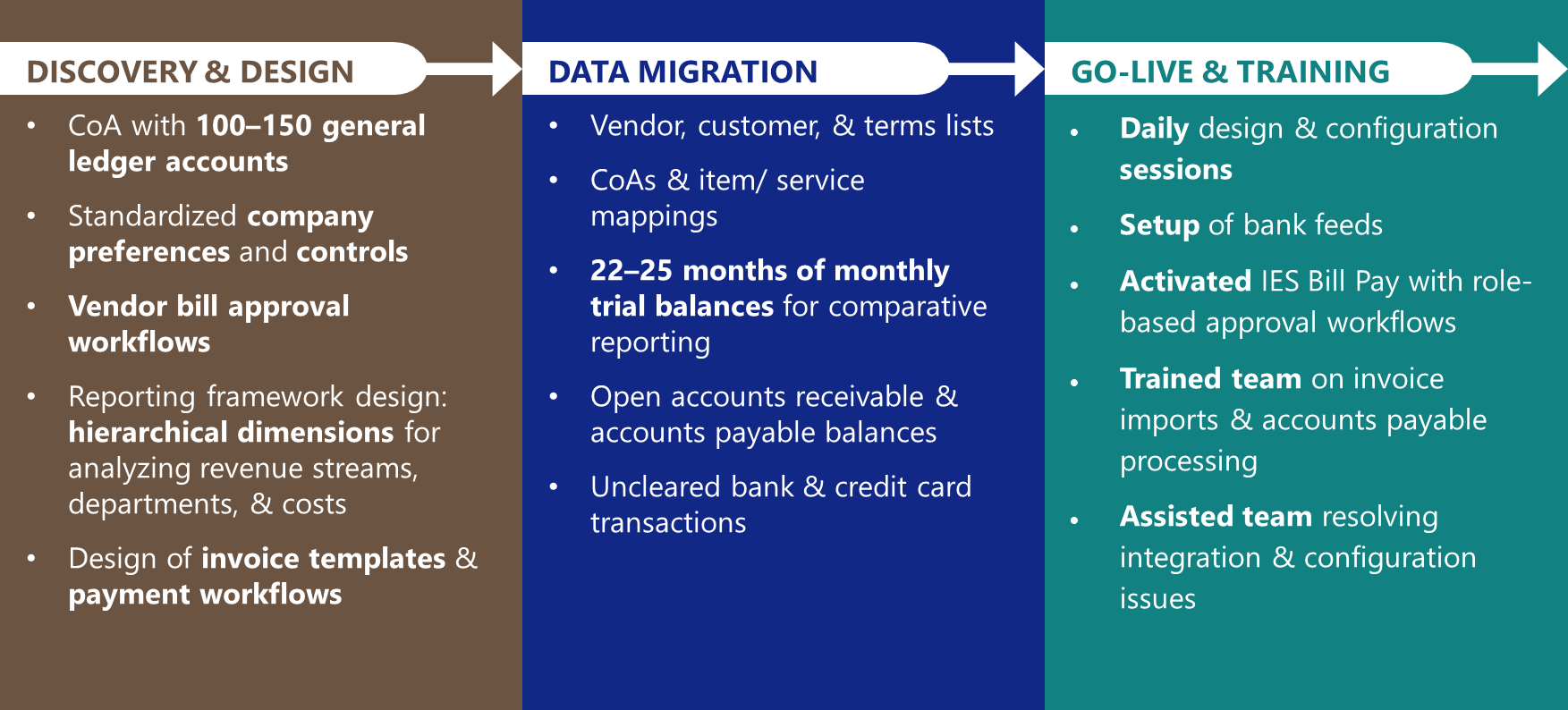
- System Redesign for Multi-Entity Accounting
A clean, scalable financial structure was built:
- Streamlined chart of accounts (100–150 accounts)
- Standardized controls across entities
- Automated accounts payable approval workflows
- Dimension-based reporting for flexible financial analysis
This approach enabled real-time insights across Departments, Revenue streams, Service lines – all without increasing system complexity.
- Strategic Data Migration
A targeted ERP data migration strategy ensured efficiency and performance.
Data Migrated:
- Customers, vendors, and payment terms
- Chart of accounts and mappings
- Two years of monthly trial balances
- Open AR/AP and uncleared transactions
Data Archived: Historical transactional data remained in NetSuite for reference
This approach preserved reporting continuity while eliminating unnecessary data bloat.
- ERP Implementation & User Training
A structured ERP implementation plan ensured smooth adoption:
- Daily collaboration with the accounting team
- Real-time issue resolution during go-live
- Training on accounts payable, invoicing, and workflows
- Integration setup (bank feeds, bill pay automation)
By launch, the team was fully trained and confident using the new system.
Results: Measurable Improvements After ERP Migration
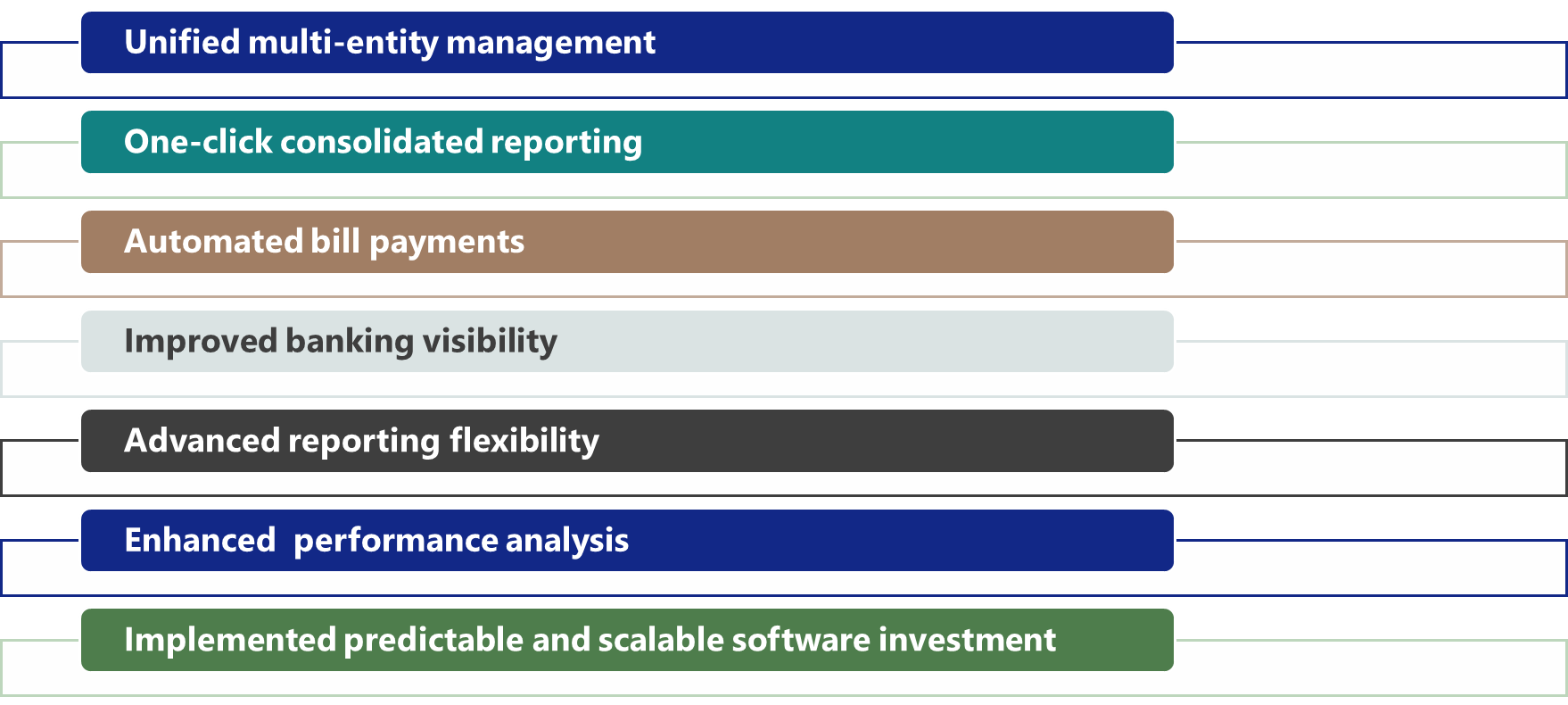
Simplified Financial Operations
The organization transitioned from a complex ERP system to a streamlined, right-sized solution aligned with its business model.
Increased Efficiency
- Seamless navigation across entities (no multiple logins)
- Reduced duplicate data entry
- Improved intercompany transaction management
Faster Financial Reporting
- Real-time consolidated financial statements
- Elimination of manual spreadsheets
- Improved reporting accuracy and speed
Automated Accounts Payable
- Bill pay automation with approval workflows
- Reduced manual processes
- Stronger financial controls
Enhanced Financial Visibility
- Dimension-based reporting for deeper insights
- Analysis across subscriptions, departments, and projects
- Improved decision-making with real-time data
Lower Total Cost of Ownership
- Eliminated unnecessary enterprise ERP costs
- Maintained scalability for future growth
Key Takeaways: ERP Right-Sizing for Mid-Market Companies
- NetSuite isn’t always the right long-term fit for mid-market organizations
- ERP simplification improves efficiency and reporting speed
- Intuit Enterprise Suite provides strong functionality without excess complexity
- Right-sizing your ERP system reduces costs while maintaining scalability
Conclusion: A Smarter Approach to ERP Transformation
This NetSuite to Intuit Enterprise Suite case study highlights a critical lesson: digital transformation isn’t always about adding more – it’s about choosing the right tools for your current business.
By aligning their ERP system with their operational needs, the company achieved:
- Greater efficiency
- Improved financial visibility
- Lower costs
- A scalable foundation for future growth
Looking for a NetSuite Alternative?
If your organization has outgrown its current structure or your ERP feels too complex for your day-to-day operations, it may be time to right-size your system.
Contact Fourlane to evaluate your current ERP environment and determine whether a migration to Intuit Enterprise Suite (Intuit ERP) is the right move for your business.
- NetSuite to Intuit Enterprise Suite migration strategy
- Multi-entity accounting and consolidation optimization
- ERP implementation, data migration, and training
- Ongoing support and CFO-level advisory