
Learn how a 7-entity organization migrated from QuickBooks Online Advanced to Intuit Enterprise Suite, reducing close time, automating intercompany accounting, and improving financial visibility.
Overview
A fast-growing group of seven interconnected companies outgrew QuickBooks Online Advanced (QBOA) as their financial and operational complexity increased. With multiple entities, intercompany transactions, and new system integrations, they needed a scalable solution.
By partnering with Fourlane, the organization successfully completed a QuickBooks Online Advanced to Intuit Enterprise Suite migration, transforming financial visibility, automation, and reporting.
The Challenge
Limitations of QuickBooks Online Advanced for Multi-Entity Businesses
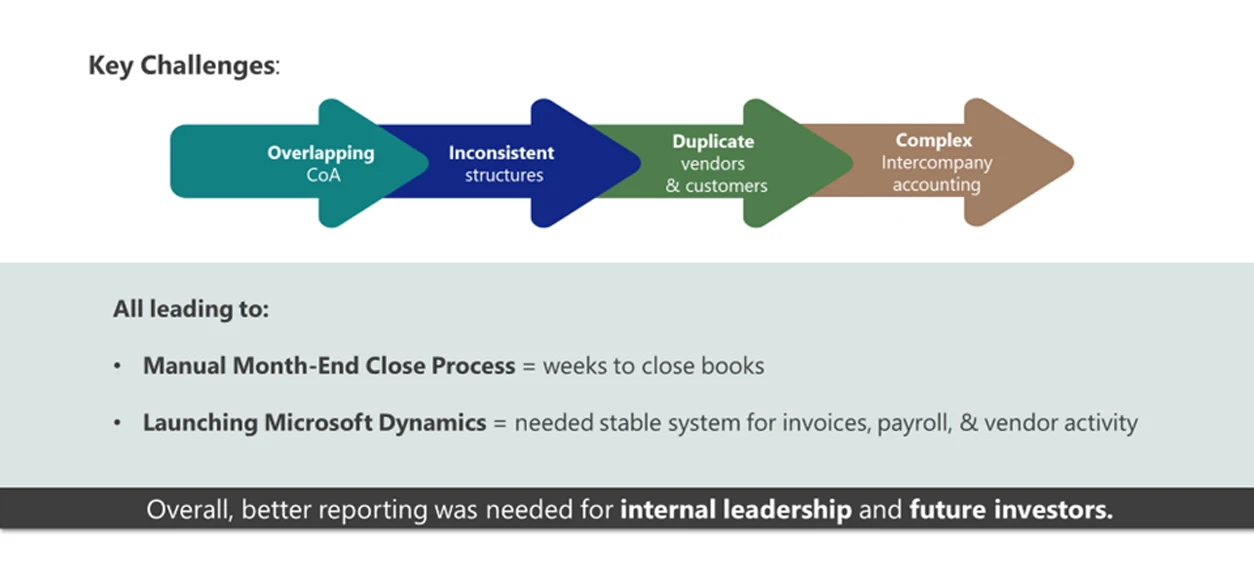 As the company scaled, QuickBooks Online Advanced could no longer support their needs.
Disconnected Multi-Entity Accounting
- Separate entity structures with inconsistent charts of accounts
- Duplicate vendors and customers across companies
- Manual intercompany accounting processes
Slow Financial Close Process
- Manual consolidation of trial balances
- Time-intensive intercompany reconciliations
- Month-end close taking weeks instead of days
Integration Challenges with Operational Systems
While implementing Microsoft Dynamics Field Service:
- Financial systems couldn’t support real-time data flow
- Increased risk in revenue recognition and reporting
- Limited visibility across entities and departments
The Solution
QBOA to Intuit Enterprise Suite Migration Strategy
Instead of extending QuickBooks Online Advanced beyond its limits, Fourlane guided the client through a full financial system redesign and migration to Intuit Enterprise Suite (IES).
Why Migrate from QuickBooks Online Advanced to Intuit Enterprise Suite?
Intuit Enterprise Suite provided:
- Native multi-entity accounting structure
- Automated intercompany transactions
- Advanced financial reporting and consolidation
- Scalability for high-growth organizations
Implementation Approach
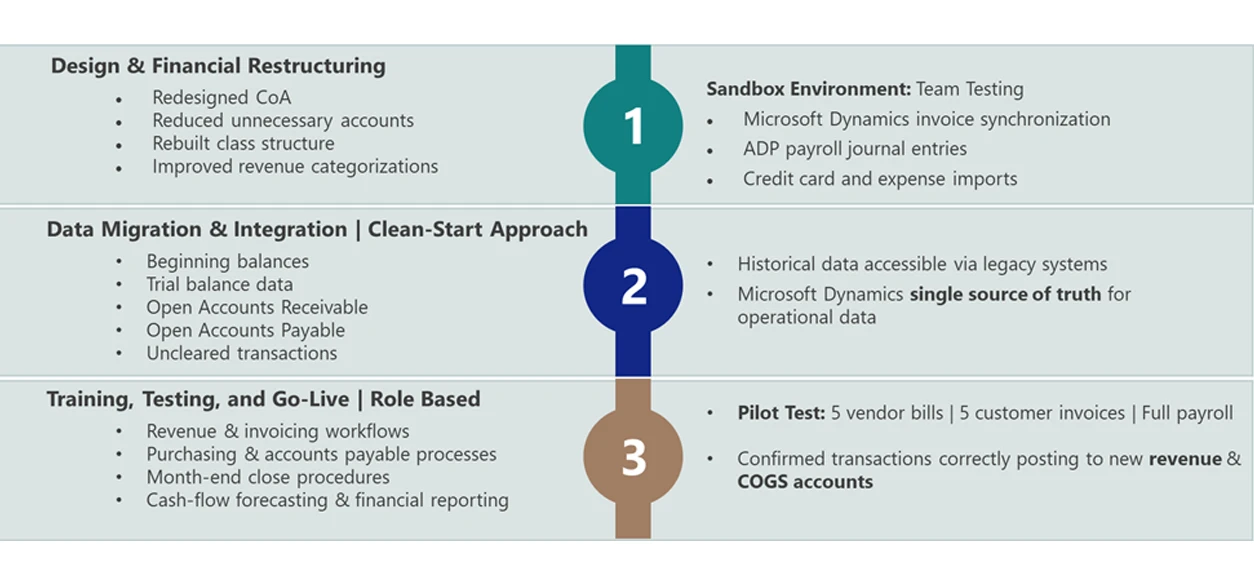
- Financial System Redesign
- Rebuilt chart of accounts aligned with business operations
- Standardized financial structures across all entities
- Improved revenue and cost tracking
- Clean Data Migration from QBOA
A clean start migration approach was used instead of moving all historical data:
- Migrated: opening balances, trial balances, AR/AP
- Retained: historical transactions in legacy QuickBooks Online for reference
- Eliminated legacy inconsistencies and duplicate data
- Integration Between Dynamics and Intuit Enterprise Suite
Defined system roles to avoid duplication:
- Microsoft Dynamics → operational system (customers, invoices, pricing)
- Intuit Enterprise Suite → financial system of record
This created a scalable, real-time data flow across systems.
- Testing, Training, and Go-Live Readiness
- Sandbox testing for integrations and workflows
- Role-based training for accounting and operations teams
- Pilot testing with real transactions (AP, AR, payroll)
- Full validation before go-live
The Results
Benefits of Migrating from QuickBooks Online Advanced to Intuit Enterprise Suite
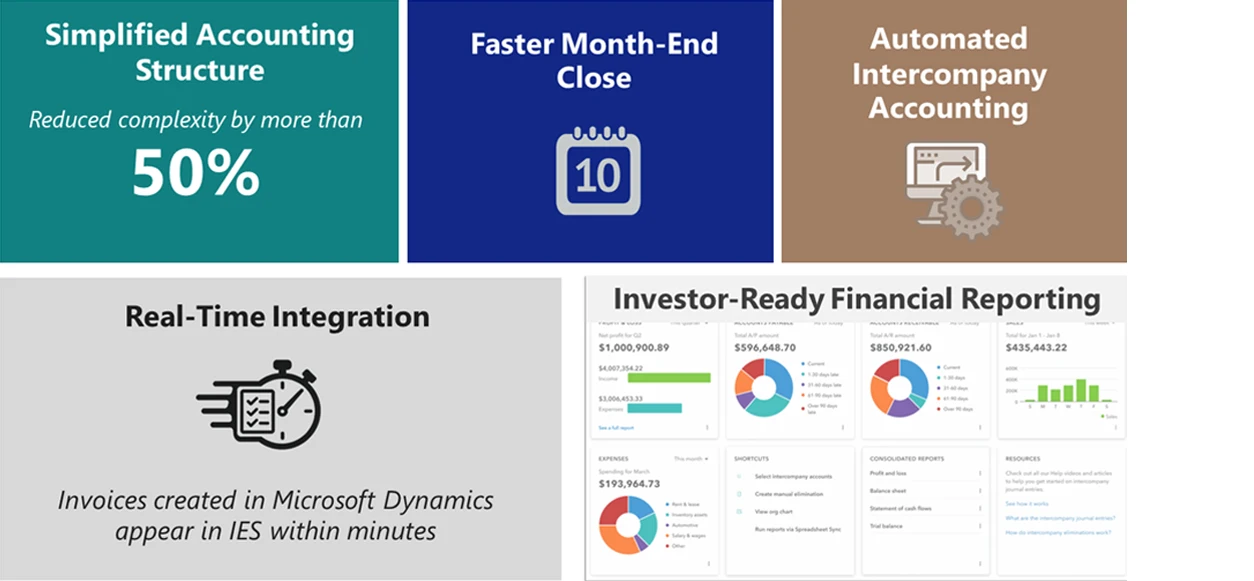
Centralized Multi-Entity Financial Management
- Unified system across all seven entities
- Reduced accounting complexity by 50%+
Automated Financial Processes
- Real-time invoice syncing from Dynamics
- Automated intercompany accounting
- Streamlined accounts payable workflows
Faster Month-End Close
- Reduced close time from weeks to ~10 business days
Real-Time Financial Visibility
Leadership now benefits from:
- Consolidated, investor-ready financial reporting
- Visibility into profitability by entity, department, and project
- Data-driven decision-making instead of manual reporting
Key Takeaways
When to Upgrade from QuickBooks Online Advanced
This case highlights when a QBOA to Intuit Enterprise Suite migration makes sense:
- You manage multiple entities with intercompany transactions
- Month-end close takes too long
- Reporting is fragmented or manual
- Operational systems (like Microsoft Dynamics) need financial integration
- Leadership lacks real-time financial visibility
Conclusion
Migrating from QuickBooks Online Advanced to Intuit Enterprise Suite enabled this organization to scale with confidence. By redesigning their financial architecture – not just migrating data – they gained automation, visibility, and a foundation for long-term growth.
Outgrowing QuickBooks Online Advanced?
Managing multiple entities, intercompany transactions, and complex reporting in QuickBooks Online Advanced can quickly create bottlenecks that slow growth. If your month-end close takes too long, reporting requires manual consolidation, or leadership lacks real-time visibility, it may be time to evaluate a more scalable solution.
Contact Fourlane to learn whether Intuit Enterprise Suite (Intuit ERP) is the right next step for your business. Our team can help you evaluate your current processes, design a scalable financial architecture, and execute a smooth migration with minimal disruption.
- Assess your readiness for Intuit Enterprise Suite
- Streamline multi-entity accounting and intercompany transactions
- Reduce month-end close times with automation
- Improve financial visibility with consolidated reporting
- Integrate operational systems like Microsoft Dynamics with confidence